
Natural Fragrance: Is It Safer? What You Should Know
Natural Fragrance: Is It Safer? What You Should Know
Fragrance is part of everyday life. It can be found in cleaning products, laundry products, personal care items, air fresheners and countless other products we use in our homes and workplaces.
But what does “fragrance” actually mean? And if a product uses a natural fragrance, does that automatically make it safer?
The answer is more nuanced than many people realize.
At Culleoka Company, we believe making thoughtful product choices starts with understanding what you're bringing into the spaces where you live, work, learn and gather.
What Does “Fragrance” Mean?
Fragrance isn't necessarily a single ingredient. A fragrance can be a formulation made from multiple aromatic ingredients that work together to create a particular scent.
Depending on the product and applicable labeling requirements, individual fragrance components may not always be listed separately. For example, FDA explains that in cosmetics, fragrance ingredients can generally be identified collectively as “fragrance” rather than each component being individually disclosed.
Fragrance formulations may contain ingredients derived from natural sources, synthetic ingredients, or a combination of both.
That's one reason we believe it's helpful to look beyond marketing terminology and learn more about the products you use.
What Is Natural Fragrance?
The term natural fragrance generally refers to fragrance created using aromatic materials derived from natural sources, such as plants.
These materials can include ingredients derived from:
- Flowers
- Herbs
- Fruits and citrus
- Woods
- Roots
- Resins
- Other botanical sources
Essential oils and botanical extracts are examples of materials that may be used in natural fragrance formulations.
However, even within the fragrance industry, there is not one universally applicable definition of “natural.” IFRA notes that the meaning can vary depending on geography and other factors.
That makes transparency and understanding the actual formulation especially important.
Is Natural Fragrance Safe?
This is the question many consumers are asking — and it's important not to oversimplify the answer.
Natural does not automatically mean safe, just as synthetic does not automatically mean unsafe.
The safety of a fragrance ingredient depends on factors including the specific substance, its concentration, how the product is used and the amount of exposure.
Even naturally derived ingredients and essential oils can cause irritation or allergic reactions in some people. FDA specifically cautions that an ingredient coming from a plant does not automatically establish its safety.
Fragrance ingredients can also cause sensitivities or allergic reactions in some individuals.
So rather than assuming that every natural fragrance is inherently safer, we believe a better question is:
What is in the product, why is it there, and how is the product intended to be used?
Natural vs. Synthetic Fragrance
There is often a tendency to divide ingredients into two simple categories: natural equals good and synthetic equals bad.
The reality is more complicated.
Both natural and synthetic fragrance materials are made up of chemical compounds. The source of an ingredient alone does not determine its safety. What matters is the ingredient itself, how much is used and how people are exposed to it.
For consumers who prefer naturally derived products, however, choosing formulations that align with those preferences can still be an important part of making more intentional purchasing decisions.
At Culleoka, that idea is central to our philosophy: understand the product, reduce unnecessary ingredients where practical, and choose solutions thoughtfully.
Fragrance and Indoor Environments
Fragrance is also worth considering as part of the larger conversation about indoor environments.
Many everyday household products can release volatile organic compounds (VOCs) into the air. EPA identifies cleaning products and other common household products among potential indoor sources of VOCs.
That doesn't mean every scented product is harmful or that every VOC presents the same risk. In fact, EPA cautions that simply labeling something “low VOC” or “no VOC” does not automatically establish that it is safer.
A more practical approach is to consider all of the products being used in an indoor space, follow product directions and provide appropriate ventilation when needed.
What Should You Look for When Choosing Fragranced Products?
Instead of relying on a single word such as natural, green, or clean, take a closer look at the product itself.
Consider:
Ingredient information
Look for companies that provide useful information about their formulations and ingredients.
The type of fragrance
If naturally derived fragrance matters to you, look for information explaining where the fragrance comes from rather than relying solely on the word “natural.”
Product directions
Use products according to their labeled directions. How a product is used is an important part of responsible product use.
Your own sensitivities
People respond differently to fragrances. If you or someone in your household is sensitive to fragrance, an unscented or fragrance-free option may be preferable.
The overall formulation
Fragrance is only one component of a product. Consider the entire formulation rather than judging a product by its scent alone.
The Culleoka Approach
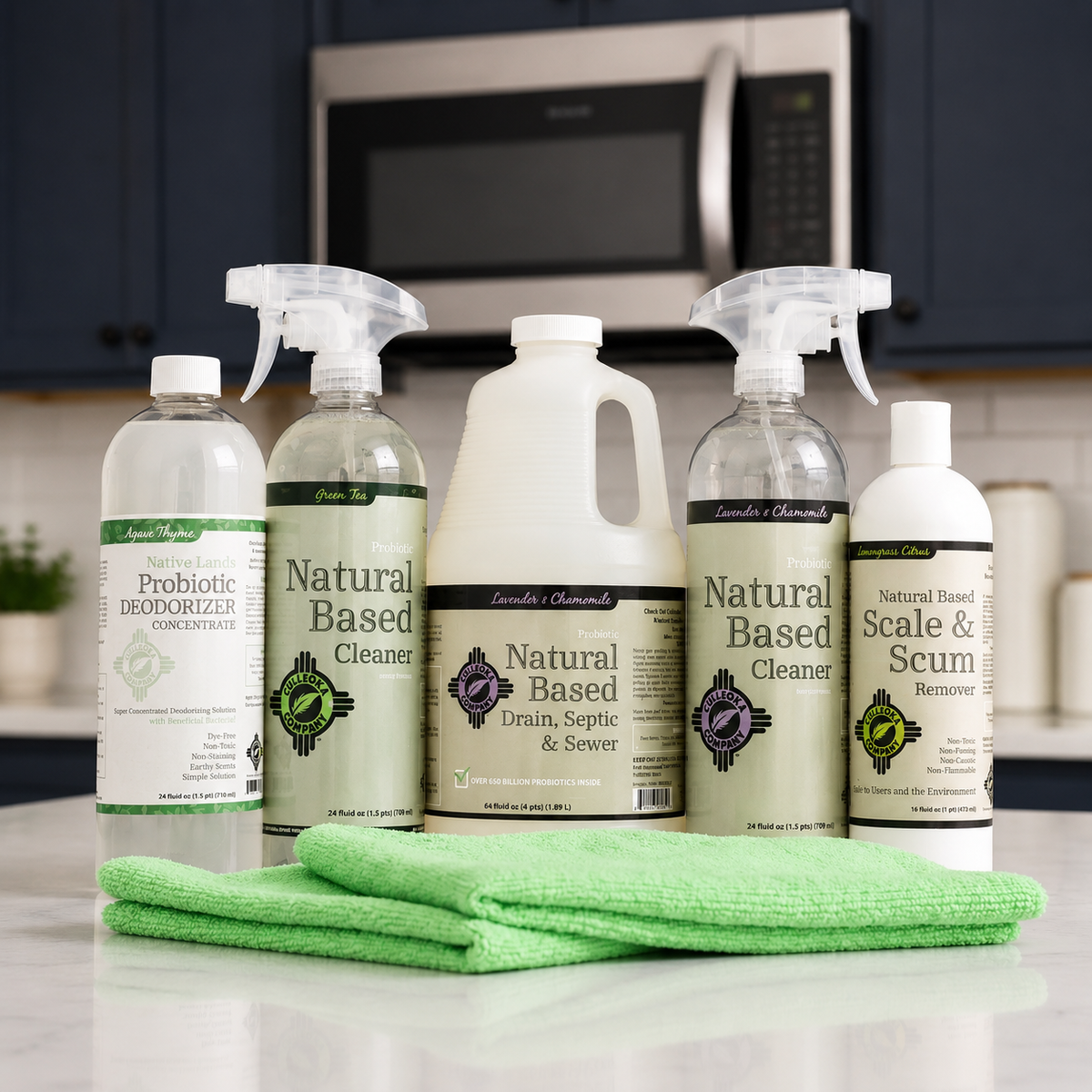
At Culleoka Company, our goal has always been to create natural-based solutions that offer an alternative to unnecessarily harsh conventional formulations.
We believe consumers and organizations should be able to ask questions about the products they use and make informed decisions about what they bring into their homes, schools, businesses and other spaces.
That's also why we don't believe in making the simplistic claim that something is better merely because it's natural.
Instead, we focus on thoughtful formulation, product performance and helping our customers understand the solutions they choose.
It's part of the philosophy behind everything we do:
Less Toxins. More Life.
A More Thoughtful Approach to Fragrance
So, is natural fragrance safe?
There isn't a universal yes-or-no answer.
Natural fragrance can be an appealing choice for people who prefer plant-derived ingredients, but natural origin alone doesn't determine safety. The specific ingredients, concentrations, intended use and individual sensitivities all matter.
The best approach is to look beyond the front of the label, understand as much as you can about the product and choose solutions that align with the needs of your home or organization.
That's the kind of informed decision-making we want to encourage at Culleoka Company.
Discover Culleoka Natural-Based Solutions
Interested in learning more about the products behind our approach?
Explore Culleoka Natural-Based Solutions
Simple Solutions for Life.
God Bless,
~Sonny Hobbs
Founder
Culleoka Company, LLC

Written by Sonny Hobbs



Leave a comment
This site is protected by hCaptcha and the hCaptcha Privacy Policy and Terms of Service apply.