
Enzyme vs. Probiotic Cleaners: What's the Difference?
Enzyme vs. Probiotic Cleaners: What's the Difference?
If you've started exploring alternatives to conventional cleaning products, you've probably encountered terms like enzyme cleaner, probiotic cleaner, natural-based cleaner, and chemical cleaner.
They aren't all the same.
Enzymes and probiotics can both play useful roles in cleaning, but they work differently. Understanding those differences can help you choose the right approach for the type of cleaning problem you're trying to solve.
What Is an Enzyme Cleaner?
Enzymes are proteins that help speed up the breakdown of specific types of organic material.
Different enzymes work on different types of soils. For example, certain enzymes can help break down proteins, fats, starches and other organic residues.
That's why enzyme-based products are commonly associated with cleaning challenges involving food, grease, organic stains, odors, drains and other organic buildup.
The important distinction is that enzymes themselves are not living microorganisms.
They perform a specific function—helping break larger organic materials into smaller components that can be easier to remove.
What Is a Probiotic Cleaner?
A probiotic cleaner contains beneficial microorganisms.
Under suitable conditions, these microorganisms can produce enzymes that help break down organic matter.
This means probiotics and enzymes are related, but they aren't interchangeable.
A simple way to think about it is:
Enzymes do the work of breaking down organic material.
Probiotic microorganisms can produce enzymes that perform that work.
When viable probiotic microorganisms remain under appropriate conditions with an available organic food source, enzyme production may continue beyond the initial application.
Enzyme Cleaner vs. Probiotic Cleaner
So what's the biggest difference?
An enzyme cleaner provides enzymes directly in the formulation.
A probiotic cleaner introduces beneficial microorganisms that can produce enzymes when conditions allow.
Both approaches can be useful for organic cleaning challenges, but probiotic technology introduces a biological component that may continue functioning after the initial cleaning process.
Exactly how long biological activity continues depends on the formulation, environmental conditions and availability of suitable organic matter.
How Does Culleoka Use Probiotic Technology?
Select Culleoka natural-based solutions use beneficial, non-pathogenic microorganisms selected for their ability to produce enzymes.
These enzymes can help break down organic matter such as fats, oils, proteins and other residues.
This technology can be particularly useful in applications where organic buildup or recurring odors are part of the problem.
For example, Culleoka uses biological technology in solutions designed for:
- Everyday surface cleaning
- Odor management
- Drains and sewer lines
- Septic systems
- Grease traps
- Other organic-waste applications
Different Culleoka products are formulated for different purposes, so product directions should always be followed for the specific application.
Do Probiotic Cleaners Keep Working After You Wipe?
Potentially, yes—but this needs some context.
When viable microorganisms remain and environmental conditions are suitable, they can continue producing enzymes while an appropriate organic food source is available.
In laboratory testing conducted through the Toxics Use Reduction Institute at UMass Lowell, Culleoka Natural Based Cleaner Lavender demonstrated probiotic activity for up to 96 hours when an organic food source/biofilm was present under the tested conditions.
That doesn't mean every probiotic cleaner will remain active for 96 hours on every surface. Temperature, moisture, available organic material, formulation and other conditions can affect biological activity.
What About Conventional Chemical Cleaners?
Conventional cleaning chemistry also has an important place in facility care.
Different chemical ingredients are designed for different jobs—from removing grease and mineral deposits to sanitizing or disinfecting when those functions are required.
Rather than thinking of every cleaning product as either “good” or “bad,” a better question is:
What are you trying to remove or accomplish?
Organic soils may respond well to enzyme or probiotic technologies.
Mineral deposits and hard-water scale generally require a different type of chemistry.
And when a situation specifically requires sanitizing or disinfecting, an appropriately labeled product should be used according to its directions.
Cleaning Is Not the Same as Disinfecting
This distinction is especially important.
Cleaning removes dirt, organic matter and other soils from surfaces.
Disinfecting is intended to kill or inactivate specified microorganisms and involves products designed and regulated for that purpose.
A probiotic or enzyme cleaner should not automatically be considered a disinfectant simply because it helps remove organic material or affects the conditions where microorganisms live.
For many everyday situations, effective cleaning is the primary goal. When disinfection is required, use a product specifically intended and labeled for that purpose.
Where Probiotic Cleaning Makes Sense
Probiotic technology can be particularly useful when the cleaning challenge involves recurring organic material.
Everyday Cleaning
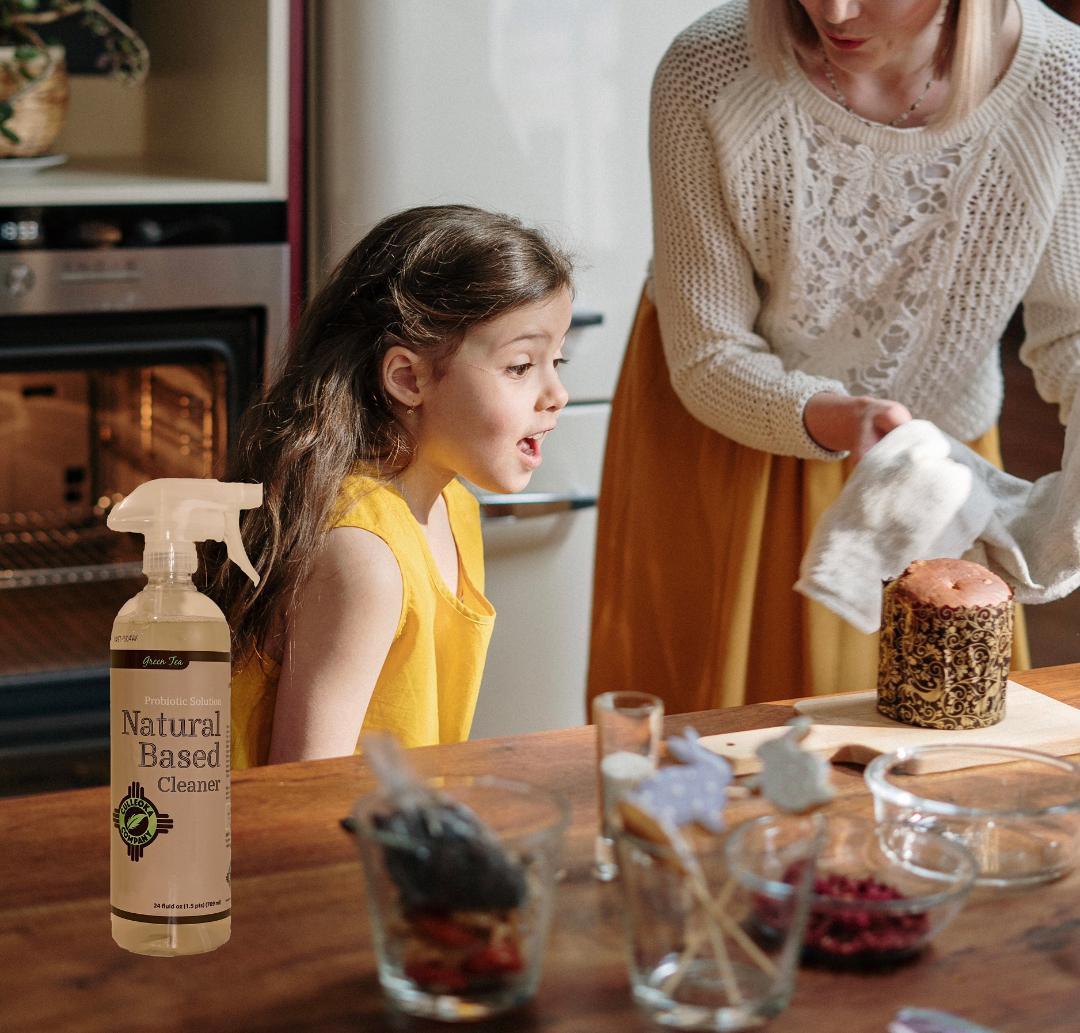
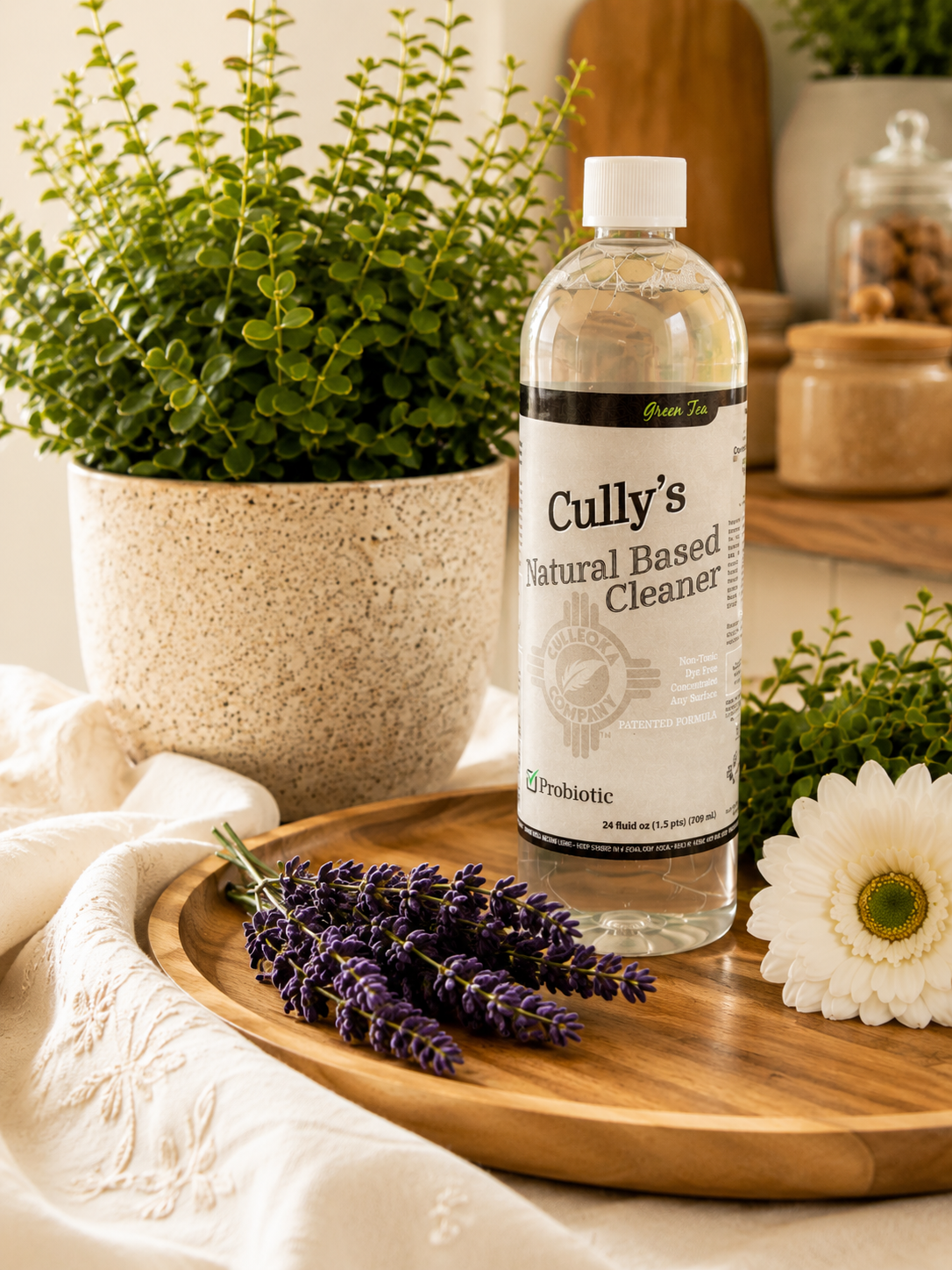
Culleoka's Natural Based Cleaner combines natural-based cleaning technology with beneficial microorganisms for routine cleaning across appropriate surfaces.
Odor Control
Culleoka's Native Lands Probiotic Deodorizer Concentrate uses probiotic technology for applications where organic matter contributes to persistent odors.
Drains, Septic & Sewer
Culleoka's Natural Based Drain, Septic & Sewer solution contains multiple strains of non-pathogenic, enzyme-producing bacteria designed to help break down organic waste in drains, septic systems, sewer lines and grease-management applications.
These are different applications, but the underlying idea is similar: use biological technology where breaking down organic matter can help address the problem.
So Which Is Better: Enzyme or Probiotic Cleaners?
There isn't one answer for every application.
If you simply need enzymes to attack a particular type of organic soil, an enzyme-based formulation may be appropriate.
If you want a biological approach in which beneficial microorganisms can produce enzymes under suitable conditions, a probiotic formulation may offer additional advantages for certain applications.
And some formulations may incorporate both biological organisms and enzyme activity as part of the same cleaning system.
The key is matching the technology to the cleaning problem.
A Smarter Approach to Cleaning
At Culleoka Company, our goal isn't to suggest that one cleaning technology should replace everything else.
We believe in using the right solution for the right application while reducing unnecessary reliance on harsher chemistry where practical alternatives make sense.
Probiotics, enzymes, natural-based ingredients and conventional chemistry can each serve different purposes.
Understanding those differences helps you make better choices for the places where you live, work, learn and gather.
Less Toxins. More Life.
[Explore Culleoka Natural-Based Solutions]
[Learn More About Why Probiotics]
God Bless,
Sonny Hobbs
Founder
Culleoka Company, LLC

Written by Sonny Hobbs


Leave a comment
This site is protected by hCaptcha and the hCaptcha Privacy Policy and Terms of Service apply.