
Common Cleaning Chemicals & Sensitivity Awareness
Common Cleaning Chemicals & Chemical Sensitivity: What to Know
Cleaning products are designed to make our homes, schools and workplaces cleaner, but some people find that certain products, fragrances or ingredients can be irritating or uncomfortable to use.
For people looking for cleaning products for chemical sensitivities, understanding what's in commonly used products—and how those products are used—is an important place to start.
Strong fragrances, aerosols, bleach, ammonia and certain disinfecting ingredients are among the substances some people choose to limit in their homes or workplaces.
This is not an exhaustive list, and sensitivity can vary significantly from person to person. Instead, consider this a starting point for becoming more aware of common cleaning ingredients, reading product labels and making more informed choices about the products used in the spaces where we live, work and learn.
1️⃣ Bleach (Chlorine-Based Cleaners)

Bleach is one of the most familiar cleaning and disinfecting products used in homes and commercial facilities.
Household bleach typically contains sodium hypochlorite, a chlorine-based compound. When used according to label directions, bleach has specific cleaning and disinfecting applications, but its fumes and direct contact can also be irritating.
Why some people limit chlorine-based cleaners:
- Fumes can irritate the eyes, nose and throat.
- Direct contact can irritate skin and eyes.
- Strong odors may be uncomfortable for people sensitive to smells.
- Using these products in poorly ventilated areas can increase exposure to fumes.
Most importantly, never mix bleach with ammonia or other cleaning products unless the product labels specifically say it is safe to do so. Mixing certain household cleaners can release dangerous gases.
For people who experience sensitivities while cleaning, reducing unnecessary exposure and improving ventilation may make the cleaning environment more comfortable.
2️⃣ Ammonia & Butyl-Based Degreasers
Ammonia can be found in certain glass cleaners, multipurpose cleaners and degreasers. Other heavy-duty cleaning products may contain solvents designed to break down grease and stubborn soils.
Even products marketed using terms such as “green” or “eco-friendly” should still be evaluated by reading their labels and directions.

Things to consider:
- Strong fumes can irritate the eyes, nose or throat.
- Some products have noticeable odors that may bother sensitive individuals.
- Ventilation can be particularly important when using stronger cleaners.
- Marketing terms alone don't tell you everything about a product's formulation.
Choosing a cleaning product should involve more than looking at the front of the bottle. Read the label, understand its intended application and follow its use instructions.
3️⃣ Quaternary Ammonium Compounds (Quats)
Quaternary ammonium compounds, commonly called quats, are ingredients used in some disinfectants, sanitizing products, sprays and wipes.
Cleaning and disinfecting are not necessarily the same thing. A cleaner primarily removes dirt and soils, while a disinfectant is designed and regulated for specific antimicrobial purposes.

Things to consider when using disinfectants containing quats:
- Follow the product's label directions carefully.
- Avoid unnecessary skin or eye contact.
- Pay attention to ventilation requirements.
- Follow required surface contact or dwell times.
- Use the product only for its intended purpose.
Not every surface needs to be disinfected every time it is cleaned. Understanding when cleaning is appropriate and when disinfection is necessary can help avoid unnecessary product use.
4️⃣ Disinfectant Wipes & Sprays

Disinfectant wipes and sprays have become common in homes, schools and workplaces because they're convenient.
However, convenience doesn't eliminate the need to follow the label.
When using disinfectant wipes and sprays:
- Use them only on surfaces specified by the manufacturer.
- Follow required contact times.
- Provide appropriate ventilation when directed.
- Avoid breathing aerosolized product.
- Follow instructions regarding gloves or other protective measures.
- Keep products away from children and pets as directed by the label.
Some people who are sensitive to fragrances or strong odors may prefer lower-odor products or may choose ordinary cleaning rather than disinfecting when disinfection isn't necessary.
product labels—many disinfectant wipes recommend wearing gloves during use.
5️⃣ Oven Cleaners & Drain Cleaners
Oven and drain cleaners are designed for particularly difficult jobs.
Because of the types of soils and clogs they're intended to address, some formulations may contain highly alkaline, acidic or otherwise corrosive ingredients.

These products deserve extra care:
- Read the entire label before use.
- Follow ventilation instructions.
- Avoid skin and eye contact.
- Never combine different drain or oven-cleaning products.
- Store them securely and in their original containers.
- Follow all manufacturer safety precautions.
For routine maintenance, using an appropriate product before heavy buildup or a severe clog develops may reduce the need for more aggressive cleaning later.
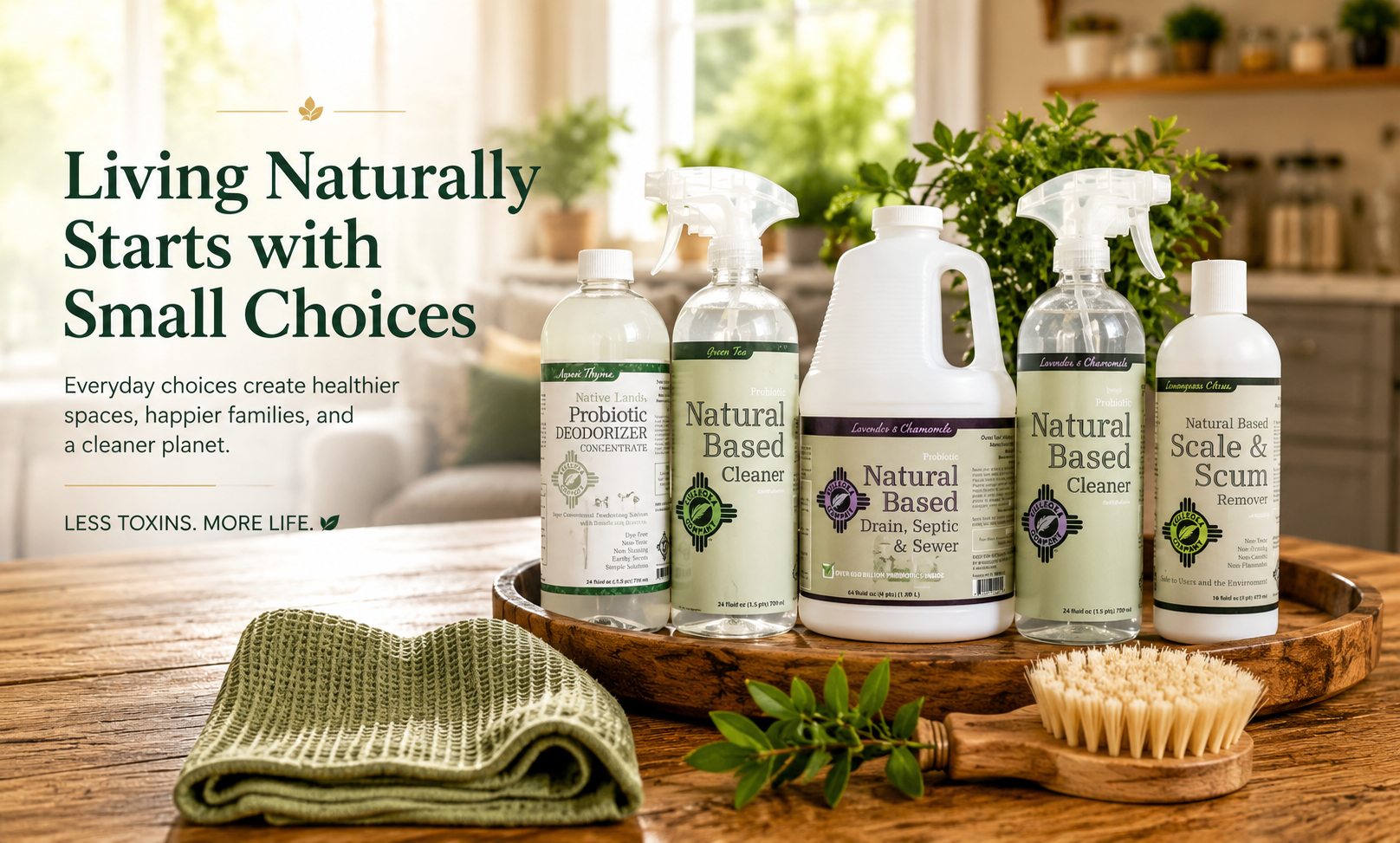
Culleoka offers a Natural Based Drain, Septic & Sewer Cleaner designed for routine drain, septic, sewer-line and grease-trap maintenance.
6️⃣ Fragranced Cleaners & Air Fresheners
These products deserve extra care:
- Read the entire label before use.
- Follow ventilation instructions.
- Avoid skin and eye contact.
- Never combine different drain or oven-cleaning products.
- Store them securely and in their original containers.
- Follow all manufacturer safety precautions.
For routine maintenance, using an appropriate product before heavy buildup or a severe clog develops may reduce the need for more aggressive cleaning later.
Culleoka offers a Natural Based Drain, Septic & Sewer Cleaner designed for routine drain, septic, sewer-line and grease-trap maintenance.
7️⃣ Mixed or Improperly Used Cleaning Products
One of the most important cleaning-safety principles has nothing to do with choosing one particular ingredient:
Don't mix cleaning products unless the labels specifically instruct you to do so.
Combining products can cause unexpected and potentially dangerous chemical reactions.
Safer cleaning practices include:
- Follow label dilution instructions.
- Never mix bleach and ammonia.
- Don't transfer cleaners into food or beverage containers.
- Keep products in properly labeled containers.
- Provide adequate ventilation.
- Don't assume using more product will produce better results.
- Store cleaning products according to label directions.
Even familiar household products deserve to be treated with care.
How to Choose Cleaning Products for Chemical Sensitivities
There isn't one cleaning product that's right for every person or every situation.
If you or someone in your household is sensitive to particular cleaning products, consider simplifying your routine and paying closer attention to the products you use.
You may want to look for:
- Lower-odor or fragrance-free options
- Products appropriate for the specific cleaning task
- Clear usage and dilution instructions
- Products that don't require unnecessary aerosolization
- Ingredient and safety information from the manufacturer
- Natural-based alternatives when appropriate for the application
Also consider how you clean. Ventilation, product concentration, frequency of use and the amount of product applied can all affect exposure.
Natural-Based Cleaning as an Alternative
Culleoka Company was founded around a simple idea: there should be another way to care for the places where we live, work and learn.
Our approach is to develop natural-based solutions for everyday cleaning and maintenance applications while helping customers make more thoughtful choices about the products they bring into their spaces.
Natural-based doesn't mean that basic safety practices should be ignored. Every cleaning product should be used according to its instructions.
But for people interested in reducing their reliance on harsher conventional cleaning products, natural-based solutions can provide another option.
Explore Culleoka's Natural Based Cleaning Solutions →
Frequently Asked Questions
What are chemical sensitivities to cleaning products?
People sometimes report irritation or discomfort associated with particular cleaning products, fragrances or ingredients. The substances involved and individual responses can vary considerably. Anyone experiencing persistent or significant symptoms should discuss them with an appropriate healthcare professional.
What cleaning products should I avoid if I'm sensitive to chemicals?
There isn't a universal list that applies to everyone. Identifying products or ingredients that seem to cause problems, reading labels, reducing unnecessary fragrance and aerosol exposure, and choosing products appropriate for the cleaning task can be useful starting points.
What is chlorine in household cleaning products?
Household bleach commonly contains sodium hypochlorite, a chlorine-based compound. It is used for specific cleaning and disinfecting applications and should always be used according to label directions.
Is bleach the same thing as chlorine?
Not exactly. Household bleach generally contains a chlorine-based chemical called sodium hypochlorite. “Chlorine” refers more broadly to the chemical element and chlorine-containing compounds.
Can I mix bleach with other cleaners?
You should never mix bleach with ammonia or other cleaning products unless the product labels explicitly state that the combination is safe. Certain mixtures can produce dangerous gases.
Are natural-based cleaning products chemical-free?
No. Everything is made of chemicals, including naturally derived ingredients. “Natural-based” shouldn't be interpreted as “chemical-free.” The more useful question is what ingredients and formulation are appropriate for the intended application.
Small Choices Can Make a Difference
Creating a healthier-feeling home or workplace doesn't necessarily require changing everything at once.
Start by looking at what you already use. Read the labels. Pay attention to fragrance and ventilation. Use products only for their intended purpose. Avoid unnecessary mixing. And when appropriate, consider whether a natural-based alternative can accomplish the job.
For Culleoka, that's what Less Toxins. More Life. is about: making thoughtful choices about the products we use in the places that matter most.
Explore Culleoka's Natural-Based Cleaning Products & Solutions →
Important Note: This article is provided for general educational purposes and is not medical advice. Individual sensitivities and health circumstances vary. Consult an appropriate healthcare professional regarding individual health concerns.

Written by Sonny Hobbs


Leave a comment
This site is protected by hCaptcha and the hCaptcha Privacy Policy and Terms of Service apply.